
Ever had a conversation so good you wished you could keep it forever?
That's what we're working on. A way to save conversations forever, offline.
Turn off your internet to learn more.
Ever had a conversation so good you wished you could keep it forever?
That's what we're working on. A way to save conversations forever, offline.
Turn off your internet to learn more.
 01/00
01/00
Could you introduce yourselves?
Daniel: I'm Daniel Armitage. I'm the co-founder and interim CTO of Offline.
Yaron: I'm Yaron Erkin, co-founder and Chief Product Officer.
Daniel: We've been working together for a while now. This is actually our third generation of tools in this space.

What's your favorite memory you've recorded?
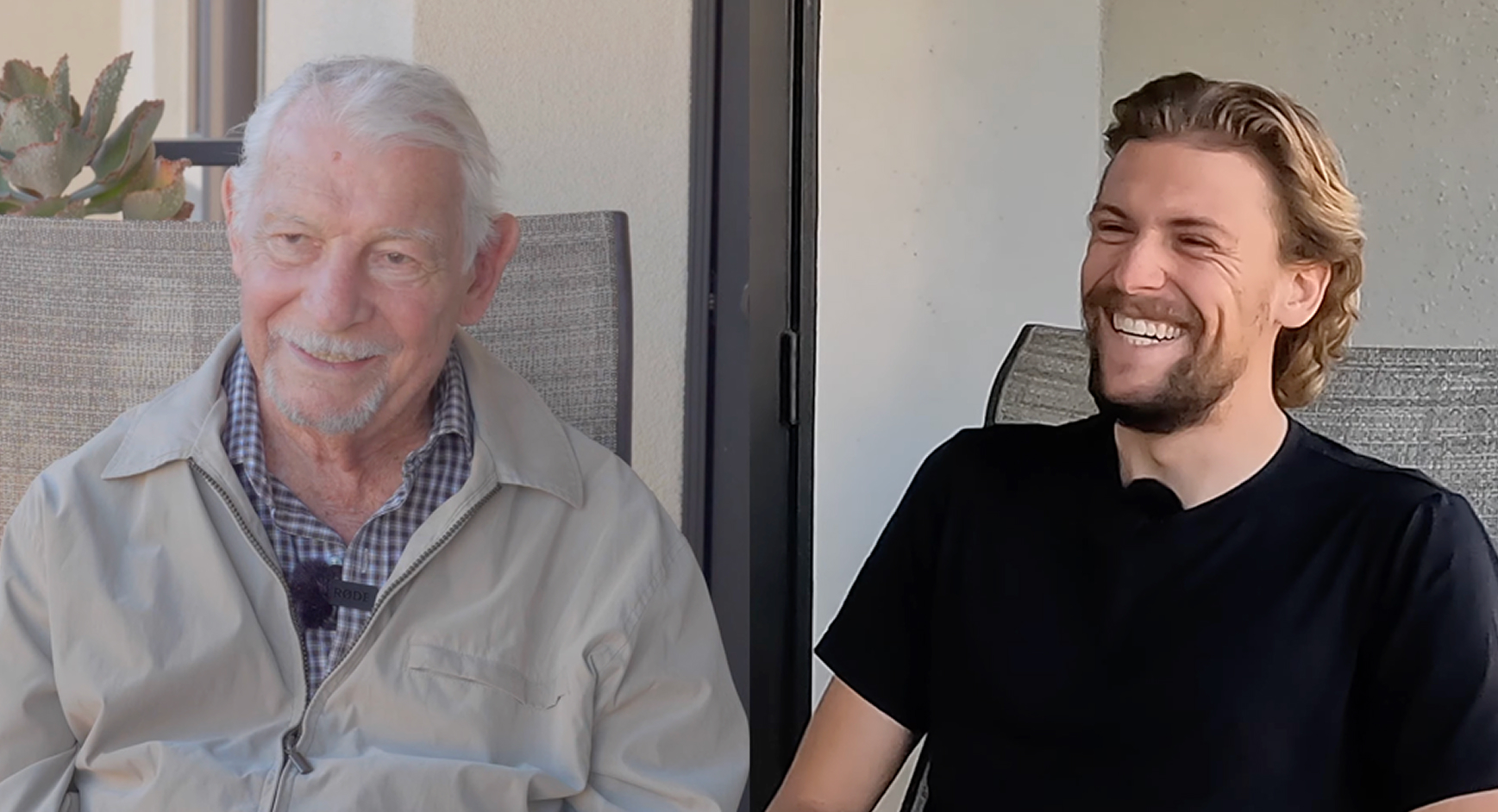
Daniel: Before my grandparents passed, I interviewed them and recorded the conversations. Now I have memories that I can share with future generations of my family, and they can hear my grandparents' words in their own voice. Stories from their life.
Yaron, you studied at Parsons, right?
Yaron: Yeah. Communication Design. With a deep focus on how typography and interfaces shape the way people understand things. My college thesis was about what we experience as we move between digital and physical spaces. It was called The User Condition. Since college, I've worked on music videos, at creative agencies, and studios.
Then Daniel and I met and we shared an interest in the intersection between what it means to be Online and Offline.
Daniel, you come from a data background?
Daniel: My first internship was in a quant group at the Canadian Pension Plan Investment Board. Then I worked as a data scientist. Then I led growth at Nansen, which is the largest crypto analytics company. I've always been playing with data.
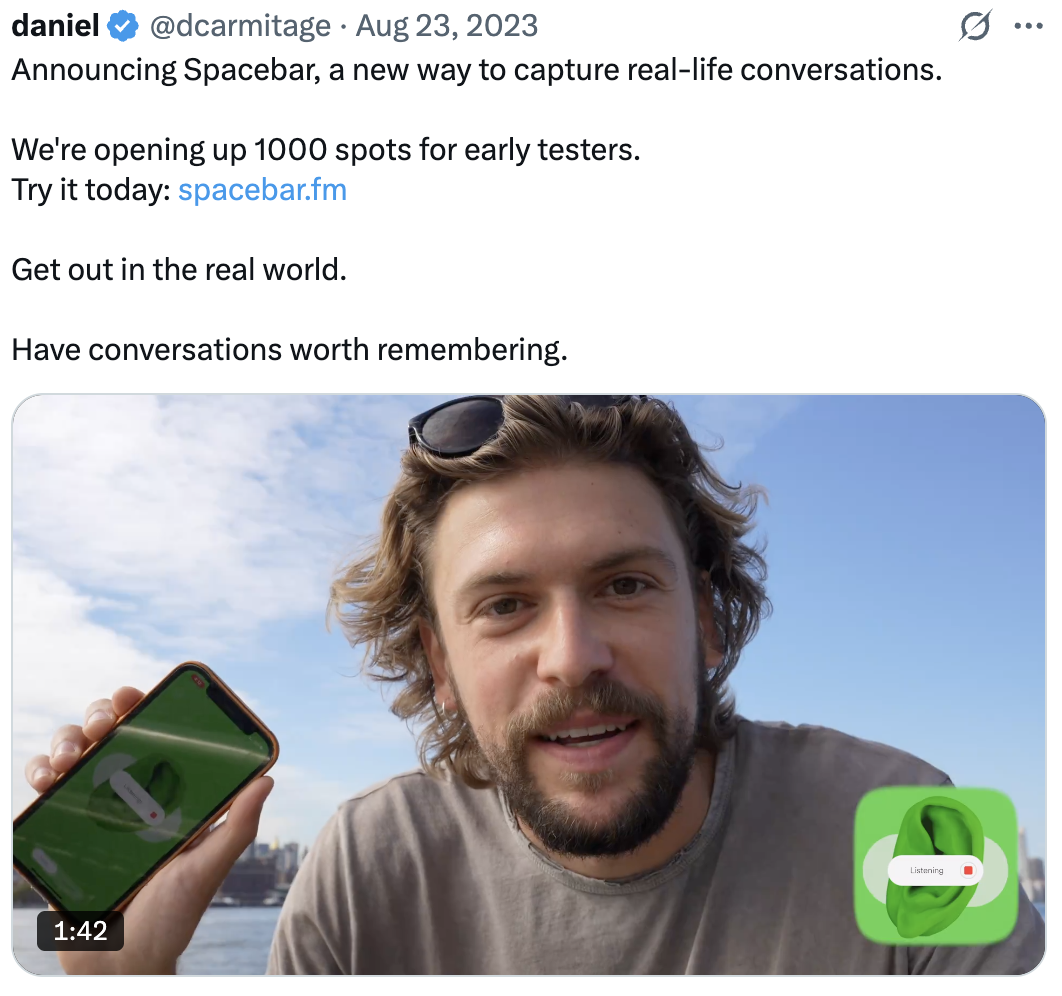
Then I built Spacebar, and I started thinking a lot about information transfer rates. Like, handwriting is around 15 words per minute. Typing is maybe 50. Speaking is like 120 words per minute. So speaking is the fastest way of transmitting information. But we process information fastest visually, not through words. There's an asymmetry there that should be reflected in technology to really complement the human mind.
What are you building with Offline?
Daniel: We're building memory tools to help you document your life, without sending any data to the cloud. An Offline Cloud for your private life. That probably sounds contradictory, an "offline cloud," but it's the best way to describe it. AI has gotten smart enough and small enough that it can run directly on your phone now. Things that used to require uploading your data online can now be done locally.
Yaron: We're starting with conversational memories specifically. We're building an app that lets you record and transcribe your conversations, and it creates this evolving library of things you're talking about.
Why does it need to be offline? That seems like a deliberate constraint.
Daniel: The conversations I have when I know nothing's going to the cloud are completely different. When I know a recording is staying on my phone, I don't mind talking about intimate details. But when I know it's being sent somewhere, I hold back.
When I started journaling, I used pen and paper because I was like, this is mine. No one has access to this unless they physically pick it up and read it.
Yaron: When I invite my sister or my friends to record a conversation, they can feel comfortable because it just stays between us.
Daniel: In my experience, the main reason people don't want to record conversations isn't that they don't like the sound of their voice, although that comes up too, it's "I don't want this online."
Why the name Offline?
Daniel: You wouldn't believe how many names we explored. Hundreds. Thousands probably.
Yaron: We kept iterating because nothing felt right.
Daniel: And then we landed on Offline and it just... felt perfect. When we said it out loud, it was exactly what we wanted.
How does the capture part work?
Daniel: Let's say you're a student going to a lecture. You sit down, snap a picture to remember where you are, and just let the app record. Then anytime the professor shows a new slide or writes something important on the board, you snap another picture. Everything gets timestamped. When you're done, everything gets processed and you end up with this transcript with images woven through it.
Yaron: A photo alone won't give you the context of what the conversation was about. And audio alone won't give you the setting or scene. We found that combining photos with a transcript tells a complete story.
What matters more: a transcript or a summary?
Daniel: We spent a lot of time on our first app perfecting the summary. We worked so hard on the prompts, on getting it just right. But I realized that's not actually what helps you remember a conversation. What matters most is being able to place yourself back in the moment. Because your human memory is actually really effective. You just need enough context clues to reactivate it. The partnership between human memory and the media you've created, that's the magic.
Yaron: It's not about replacing your memory. It's about aiding it.
Daniel: Right. It's overwhelming when I see all these AI summaries, all these things I'm supposed to read. Actually, my memory is good enough. Sometimes I just need help to access it.
How do people currently use their phones for memory?
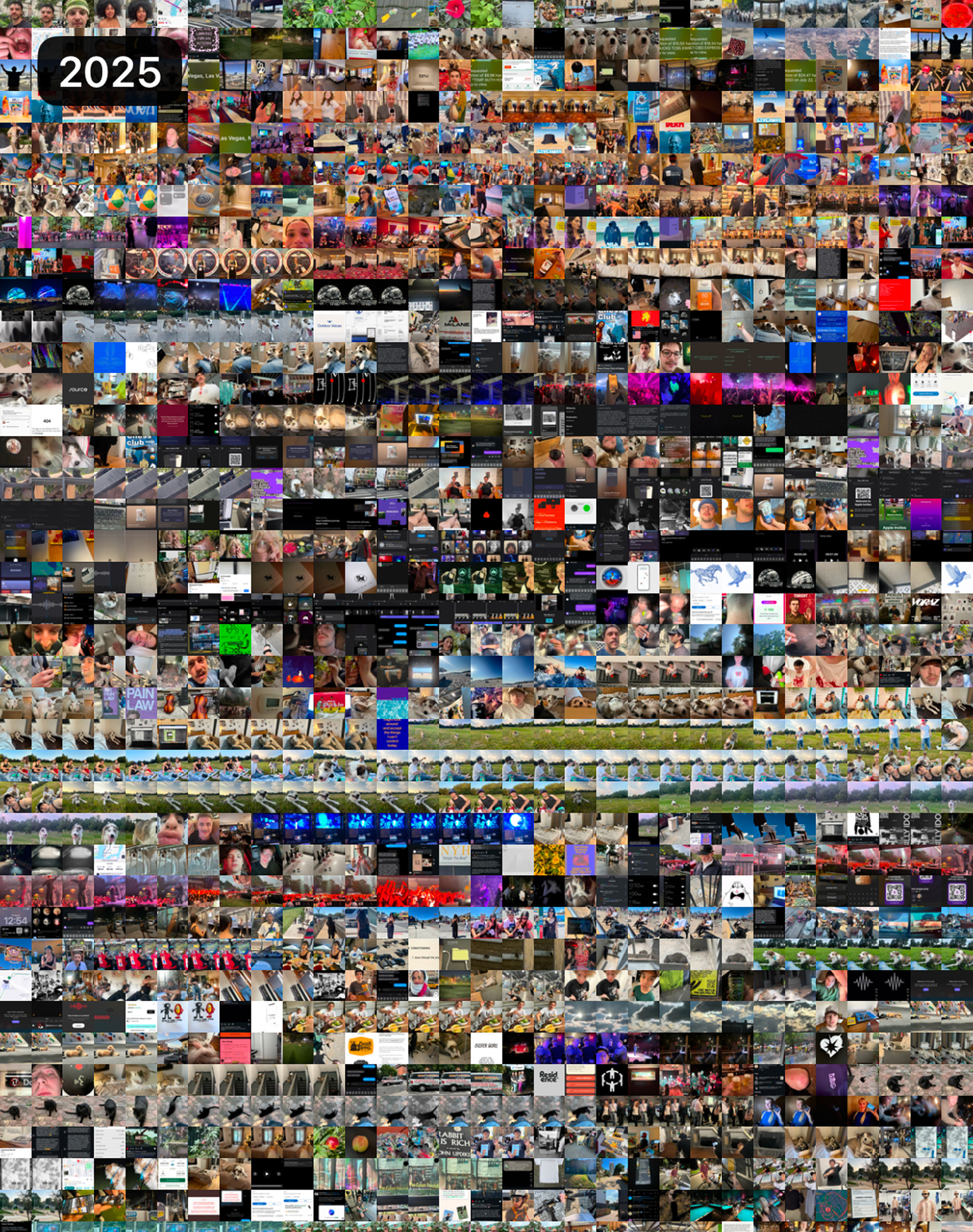
Yaron: When people want to remember something, they go to their camera roll. We want to improve that form of memory. Conversations should be part of those memories. We want to be a photo album for conversations.
Daniel: Exactly. We want to augment photos with what you talked about, and make a unified experience on your phone where photos can be linked to conversations.
What broader impact do you think Offline will have?
Daniel: Human history only includes what's been written and documented. We want more people to be included in the history books, so we need to give them great tools to document their lives.
Yaron: Before the iPhone camera and photos app, there wasn't a good way to journal what you saw in the world. Now there are professional photographers everywhere because the tools became available.
Daniel: I think in five years, we'll see professional "conversationographers". People capturing incredible conversations they couldn't capture before because the tools didn't exist. A whole form of journalling, and art even.
Let's talk about AI for a moment. Where do you see this going?

Daniel: When I think about how AI has made major leaps forward, it's been by scientists observing how humans work, and trying to make AI more human. Geoffrey Hinton's back-propagation paper in the eighties figured out how neural nets could learn, inspired by how humans learn.
Currently AI is smart, but labs haven't figured out a great memory system yet. It's a huge area of research. We think the solution will come from deeply understanding how people remember.
Is there anything we didn't talk about that you think is important?
Yaron: A few months ago, I asked Daniel, "What are we doing and why are we doing it?" He said, "If we're doing it, it's because we fucking love it."
Daniel: We're building something we love. And we feel like other people will love it too.